We use third-party cookies in order to personalize your experience.
Read our Privacy Policy.


In today’s healthcare environment, patients move fluidly between providers, health systems, labs, and virtual care. They expect their data and care plans to move just as seamlessly.
However, laboratory workflows often find themselves lagging. Patients choose where to have labs drawn based on convenience or cost, but most systems aren’t designed to support that flexibility creating fragmentation, manual work, and gaps in care.
At Maimonides Medical Center, the challenge wasn’t just connectivity; it was aligning workflows across systems, departments, and external labs.
Ensuring accurate patient matching, maintaining provider visibility, and capturing charges reliably were critical, especially as virtual care and cross-organizational collaboration expanded.
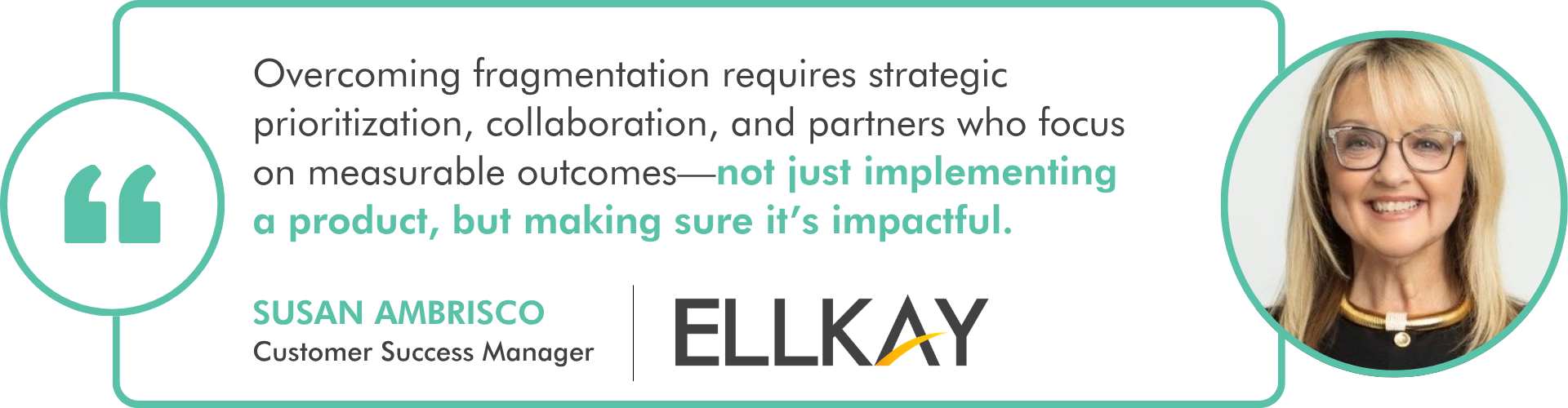
In partnership with ELLKAY, Maimonides implemented Lab Shadowing, an interoperability model that allows lab orders to follow the patient.
When a patient presents lab work, their order is already available in the system, accurately matched and ready to process, without manual entry or workflow disruption. Behind the scenes, ELLKAY enables real-time exchange of orders, demographics, and insurance data across the multiple laboratories used by Maimonides patients.
The result is simple but powerful:

|
|
|
Maimonides extended this approach beyond laboratory workflows using ELLKAY’s data management platform:
This created a scalable foundation for interoperability across the organization.
The results go far beyond IT improvements:
This partnership highlights an important shift: interoperability is no longer just a technical goal; it’s a strategic capability. By aligning technology with real-world workflows, Maimonides and ELLKAY created a model that supports patient choice, improves efficiency, and strengthens financial performance.
Lab Shadowing is more than a single solution; it’s a blueprint. As healthcare continues to expand beyond traditional boundaries, organizations that enable seamless data flow across systems will be best positioned to deliver connected, patient-centered care.


.webp)

