A clinician pulls up a chart missing half of the story. A compliance officer opens an information-blocking complaint with a high price tag, one that started as one with a single mismatched record. A data team spends a quarter untangling the systems inherited from the last acquisition, before they can even start the project they were hired to do.
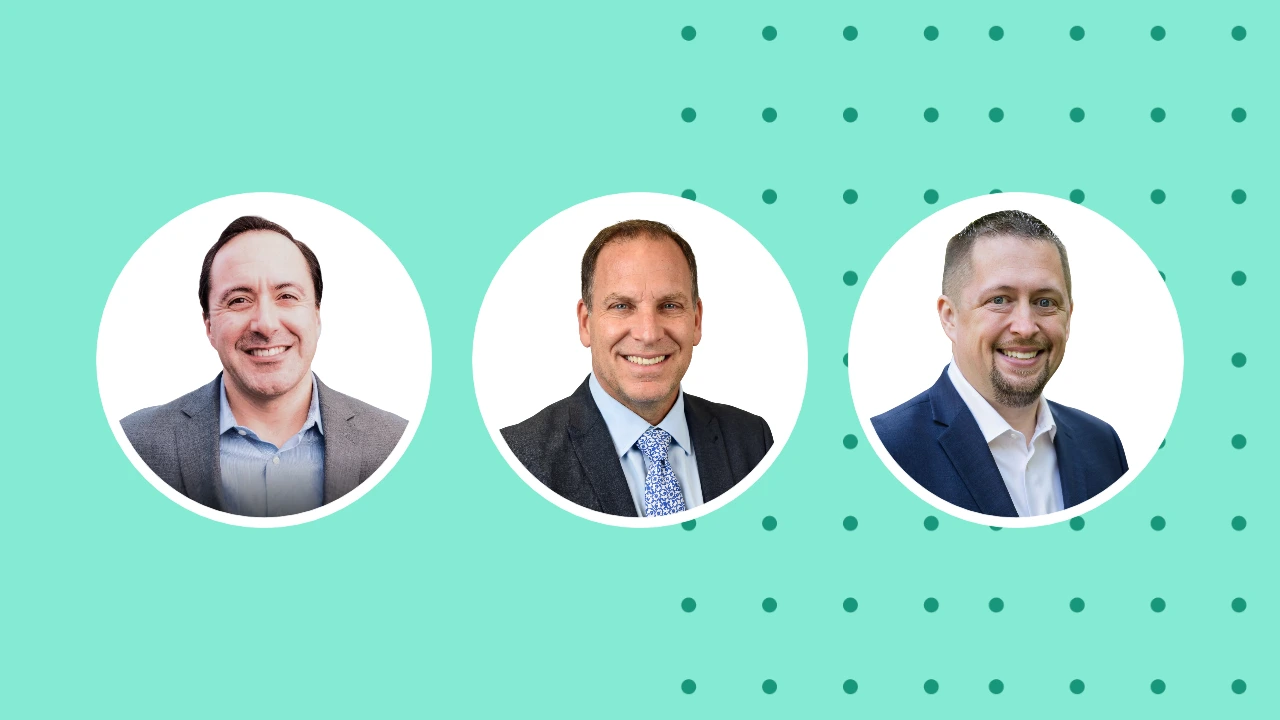
None of these are hypotheticals. They're the everyday cost of disconnected data in healthcare, and it's a problem health IT leaders know intimately. Aaron Miri (EVP & CDIO, Baptist Health), Daniel Howard (VP & CIO, San Ysidro Health), and Nick Shepard (AVP, Data Orchestration, MultiCare) have each faced a version of this challenge in their own systems. Their experience points to a shared, unresolved problem across health systems of every size, and a few hard-won ideas about how to close it. Underneath every one of those ideas is the same distinction: being connected isn't the same as being accountable for what happens once you are.
The Problem Isn’t the Data, It’s What Happens Between Systems
Every one of these leaders landed on some version of the same root issue: healthcare organizations aren't short on data or tools. They're short on trust in that data, and on the people who know how to use it. Can you tell good data from bad, and prove it? Who should have access to what, and why? Add a merger or acquisition, and what looked like one integration problem turns into dozens of smaller ones, each with its own EHR, its own interfaces, its own quirks. Being connected was never the hard part. Staying accountable for what moves through that connection is.
That trust gap isn't theoretical. It shows up as a bill, a compliance deadline, or a decision made without enough information. Daniel Howard put a number on what's at stake when that gap goes unaddressed: one information-blocking complaint can run $50,000, and a systemic issue multiplies that fast. Nick Shepard pointed to Washington State's move this year to collapse a decades-old, discharge-based retention rule into one flat standard: 26 years from the date a record is created, no more separate clock for pediatric records. Retention rules aren't new. What's new is how often they change, and how easy that makes it to fall out of compliance without realizing it. The clinical stakes are harder to put a number on, but no less real. As Howard put it plainly:
{{quote-1}}
Data Is the Currency of Healthcare, and It Deserves the Same Discipline as a Bank Account
Closing that gap starts with treating data like the asset it actually is. Aaron Miri offered framing that stuck: “data isn't just an asset, it's currency,” but most organizations don't guard it the way they'd guard money. You wouldn't post your checking account number and password for the world to see, so why treat clinical data with any less care? That means governance isn't a compliance checkbox. It's the difference between data that's trustworthy enough to act on and data that just adds noise.
That same discipline is what makes AI worth trusting. Shepard was direct about it:
{{quote-4}}
As patients increasingly turn to consumer AI tools for health answers, bad inputs don't just produce bad outputs, they produce confidently wrong ones. For health IT and interoperability leaders, that reframes AI readiness as a data problem first, not a model problem.
The Fix: Process, Literacy, a Seat at the Standards Table
There's no single tool that solves this. Instead, healthcare IT experts are creating new disciplines:
- Treating integration and data as one connected function instead of two, backed by a common taxonomy and lexicon.
- Ongoing literacy work so people across the organization actually know where to find and how to use the data they already have.
- Active participation in the standards bodies to help shape emerging requirements, rather than waiting to react to them.
Standards work is no different. An organization either shows up and helps write the rules, or waits around to react to them. Miri, who spent eight years co-chairing the federal HITAC, has a clear takeaway: get involved in TEFCA, USCDI, and ONC-level work, because that's where the rulemaking is heading, and real-world feedback from the people living the problem makes the standards better for everyone.
A Partner, Not a Vendor
That kind of ongoing work, standards seats, literacy building, one shared taxonomy instead of forty, is exactly what separates a partner from a vendor. One thing every health IT leader agrees on: the difference between a vendor and a partner. A vendor does their piece and hands it off; a partner sticks around to guide, strategize, and stay accountable for how the whole thing works together after go-live. Howard credited ELLKAY's archive for keeping his lean BI team functional through constant M&A activity.
Shepard was even more direct about what separates the two: "There are very few organizations you work with that become a true partner instead of a vendor. That's what we've found with ELLKAY." MultiCare recognized the value in expanding beyond point solutions, electing to work with a single partner supporting interoperability and data orchestration for exactly that reason, in Shepard's words, because ELLKAY "earned that right as a partner."
Miri summed up the market pressure driving all of this:
{{quote-3}}
He called ELLKAY “the equalizer”, not because it simplifies away the complexity of healthcare data, but because it makes that complexity usable.
That role is backed by scale and experience: connectivity to more than 750 EHR and PM systems, 4,000+ interface templates, 95,000+ live interfaces, more than 20 years in the market, and an exclusive CommonWell TSP designation.
That’s the specific, proof-backed version of healthcare data orchestration in practice: interfaces, networks, and data managed by one accountable partner.
The Takeaway for Every Health It Leader Watching
Strip away the individual stories, and what's left is a straightforward answer for any CIO, CDIO, or data leader navigating interoperability, compliance, and AI readiness at the same time: the technology exists. The gap is data ownership. Nick Shepard framed it well:
{{quote-2}}
Until an organization decides who's accountable for that movement, end to end, the error reports, the stalled AI pilots, and the clinicians working from an incomplete picture aren't going away. They're just waiting for the next acquisition, the next audit, or the next patient who needed the full record and didn't get it. The health IT leaders already ahead of that curve have stopped asking who's connected. They've picked a partner who's accountable for what happens next, and stopped losing sleep over the rest.
"You can't quantify the downstream effect of a clinical decision made without the full data picture."


"There's a point where interoperability, the ability to move data from system to system, runs into challenges. That's the shift: to orchestrate the movement of data, not just move it."


“It’s the reality of the market moving so fast. Adaptability is the key. The more portable you are with data, that’s where you’re gonna win.”

"We have to ensure that our data has the information and the value it needs so that AI can tap into it."