We use third-party cookies in order to personalize your experience.
Read our Privacy Policy.


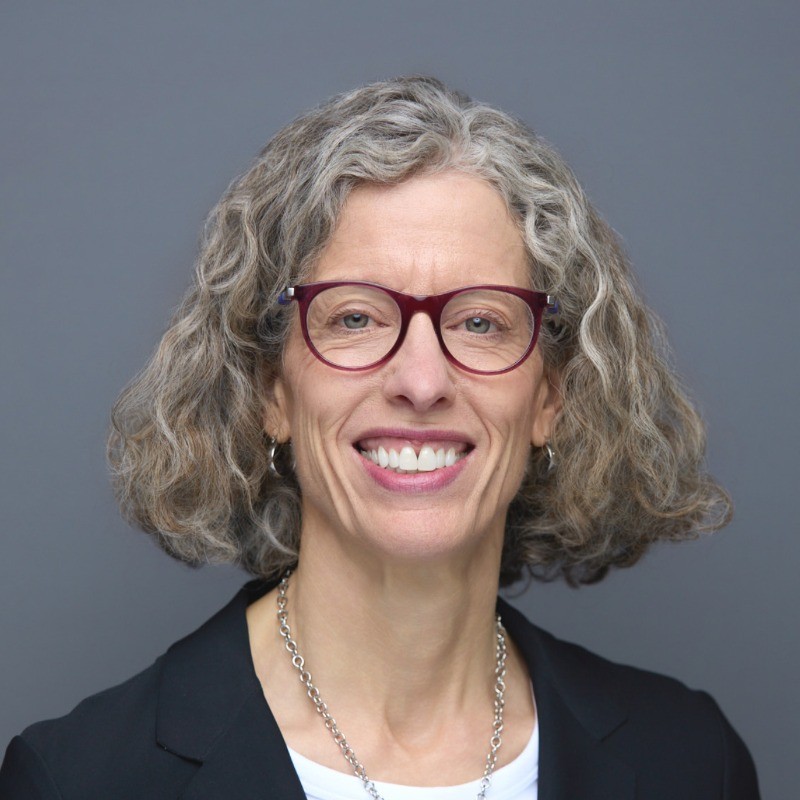
I hadn’t originally pictured myself blending healthcare with technology, but a grad school fellowship at a county hospital’s IT department changed that. “They really use computers in healthcare?” I remember thinking. It was the unexpected start of my career path.
Upon graduating with my MHA and MBA, that sense of purpose only sharpened. I was awarded admission into Delta Omega, the public health honor society—despite not holding a public health degree. Even then, my “mission matters most” approach to my future career was evident to those around me.
At Kaiser Permanente, a remarkable female mentor pushed me further. “Technology is going to transform healthcare, Laura—lean into it,” she said. She was right, later playing a key role in Kaiser Permanente’s massive Epic rollout. Her guidance solidified my commitment not just to technology, but to providing better care and to lifting others up along the way.
That commitment was recognized in 2020, when I was named a “Female Leader in Technology Consulting” by Consulting Magazine. It was a tremendous honor and a meaningful milestone, reinforcing my dedication to helping other women succeed and lead in the field.
I tend to look at innovation from a couple of different angles. I like to start by asking, “Are we truly solving a problem in a useful and creative way that moves the needle?” The key point is solving a problem. There are plenty of solutions out there, but unless they address a clear use case, that’s not real innovation—it’s just a shiny object that can become expensive and distracting for healthcare organizations.
The other side of innovation is creativity. I do a lot of work with safety-net organizations, and I find them to be some of the most ingenious, creative, and innovative groups out there, precisely because they don’t have the resources to chase every new shiny thing. They’re used to being self-sufficient and innovating from the inside out.
From a rural perspective, I see three major trends shaping health IT.
First is AI. Not just adoption, but governance. Rural organizations need clarity on how to evaluate AI tools, manage their use, and share information about them in communities that often have different levels of comfort with new technology. It's those factors that enable and drive adoption.
Second is cybersecurity, which remains a significant challenge. It forms the foundation of everything we do, yet it’s often deprioritized when budgets are tight. Without a strong cybersecurity foundation, anything built on top only increases risk.
Third is infrastructure modernization, especially cloud readiness. Many rural organizations have stretched legacy systems for cost reasons, which has put them behind their urban peers. Yet, that can also be an advantage. Being behind sometimes allows you to leapfrog an era of tech. For example, AI models can take relatively “messy” data and make use of it. For rural hospitals and low-resourced organizations, this can be a game changer and expedite their digital journey.
Overall, it’s a pivotal moment for rural healthcare. Those ready to modernize can make transformative progress.
Recent national funding changes will heavily impact rural healthcare. The Rural Health Transformation (RHT) Program will help soften the blow, but it will also require providers to operate differently at both the individual and regional level.
The RHT Program has real potential, though the pace and fragmentation of its rollout is concerning. Each state is moving in its own direction—a long-standing challenge in healthcare, especially around data. ELLKAY sees this every day. Without coordination, the program’s impact may not reach full potential. Still, it’s encouraging to see technology and AI recognized as priorities.
As states allocate their funds, common themes are emerging in virtual care, workforce, and innovation. A coalition of states and/or providers aligning around shared models or solutions could be especially powerful and drive efficiency.
For many rural organizations, collaboration is becoming a survival strategy. Shared services and pooled technology resources can help them remain independent while lowering costs.
Ultimately, this is a moment for innovation. Rural health organizations are nimble and resourceful—and that mindset is exactly what’s needed now.
Keep learning, stay curious, and understand the chain of influence: policy shapes strategy, and strategy shapes technology. That mindset has guided my entire career, and I’ve always sought to stay attuned to policy. For example, I remember when the federal government released the HITECH rules for EHRs. I knew it was going to be big, so I printed all 900 pages and read the rule cover-to-cover. That gave me a deep understanding of how the rules would impact hospitals and providers, strategically and technologically. It helped me better advise organizations preparing for the shift.
The core lesson is this: even if you work in a narrow area, always look upstream. Understand the forces shaping your field, because that’s where the real change begins.
And finally, find your tribe. Build a circle of fellow healthcare IT professionals, especially women, who support one another professionally and personally. My mentors and peers have become true friends. We may only see each other at conferences a few times a year, but we’re always a call away when someone needs advice or a sounding board. That kind of support network is invaluable.
When I lead and grow a team, I’ll admit I have a bit of bias—I want to see younger and non-traditional professionals succeed in healthcare. Over the years, I’ve worked with so many talented female leaders and emerging professionals that I naturally find myself thinking, “It’d be great to collaborate with her on this project,” or “Let’s tackle this together.”
It is important to understand that diversity across genders, cultural backgrounds, and experiences brings tremendous value to the workplace. I keep that in the forefront of my mind when building teams to ensure we bring in different perspectives and voices.
For me, everything comes back to mission.
My passion for low-resource and safety-net organizations began in graduate school during a project at a federally qualified health center in Minneapolis. I walked in knowing nothing about FQHCs, but I left inspired by the people—their commitment, persistence, and compassion for their communities.
Since then, I’ve worked in academia, consulting, and tech, but I always return to public health and low-resource settings. The impact is tangible. In these organizations, you can see how your work directly supports caregivers and improves lives. That sense of purpose is what keeps me in healthcare.


.webp)

